
Manpower crunch hits Hong Kong’s public healthcare sector
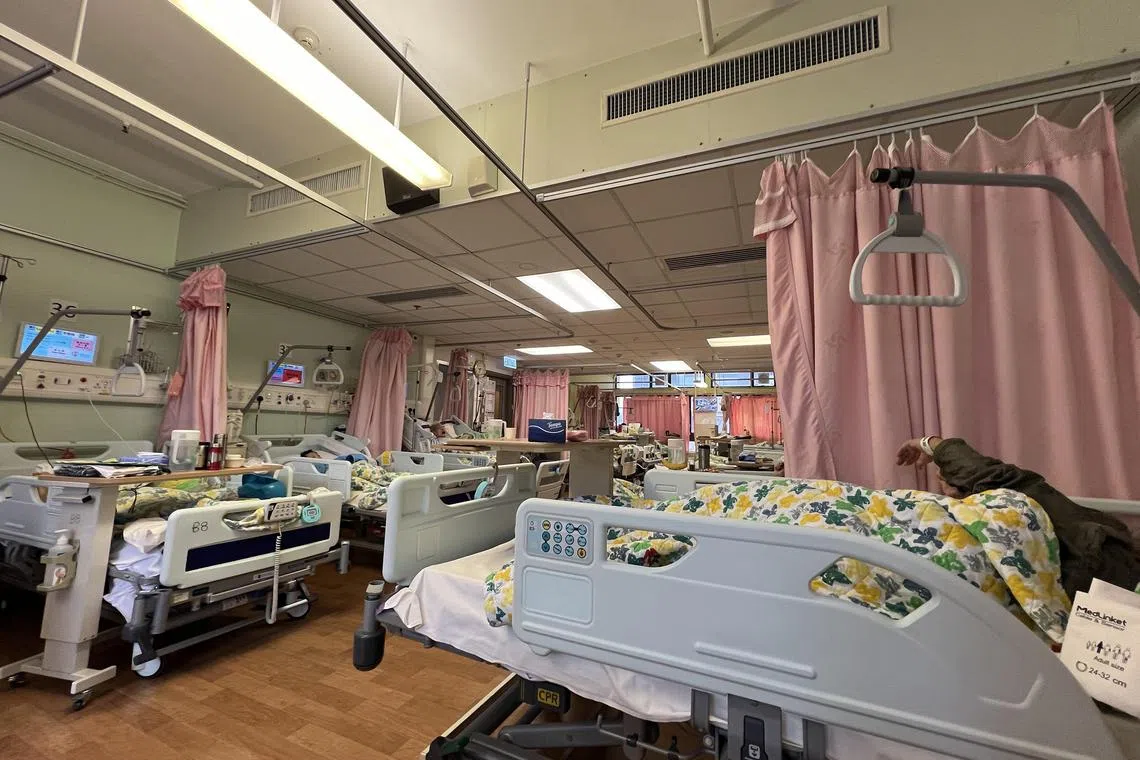
HONG KONG – News of the abrupt suspension of services at a public hospital department in Hong Kong has cast the spotlight on the manpower crunch facing the city’s healthcare sector.
The authorities on Feb 7 said the Hong Kong Children’s Hospital in Kai Tak had temporarily shut its ear, nose and throat department, referring over 500 patients to other public healthcare facilities.
This came after one doctor resigned and another took sick leave in the department’s three-member team.
Amid an outcry over the Hong Kong government’s medical manpower planning, the Hospital Authority (HA), which manages the city’s public hospitals, said it expected to gradually resume the department’s services in the second half of 2025 after hiring more doctors.
Hong Kong’s public healthcare sector has faced a shortage of doctors and other medical personnel for the past two decades.
But while the government has made progress in boosting hiring and adopting other policies to alleviate the problem, it has become even more pressing in recent years with an exodus of talent amid a rapidly ageing population. A crisis looms if the city fails to adequately address these manpower gaps.
Anecdotally, patients interviewed by The Straits Times say they faced long waiting times or less-than-ideal service levels at public hospitals, given the labour crunch.
Mrs Anna Lai’s elderly mother left Ruttonjee Hospital’s accident and emergency (A&E) department without receiving treatment after a six-hour wait one night in December 2024.
The 80-year-old woman had sustained multiple injuries from a fall that night.
“My mother was in pain but we left the emergency department after waiting for more than five or six hours,” Mrs Lai, a project coordinator in her 50s, told ST.
“We know her case wasn’t as urgent or as serious as many others, but my mother was frustrated with not knowing when her turn to be seen by the doctor would come.”
Her mother eventually received treatment at a private clinic the following day, Mrs Lai said.
It is not uncommon for Hong Kong’s A&E wait times to extend past eight hours, although it can be as short as about an hour, depending on the time of day and severity of one’s condition.
In Japan and South Korea, the wait is typically under an hour, while in Australia, it could extend to five hours, according to healthcare data website Doctorsa. In Singapore, the wait can be between 20 minutes and around four hours, according to the websites of the country’s public hospitals.
The average daily number of patients that visited Hong Kong’s A&E rooms surged past 5,000 in December 2024 amid a spike in cases involving respiratory diseases and the elderly. The wards at many hospitals were fully occupied.
The city is deep in its winter influenza season, having already recorded at least 88 deaths – a 30 per cent jump from the same period in 2024. The flu season is expected to last until April.
Office worker Andrew Li, 34, said the manpower crunch was evident in the service levels he observed during his recent four-day stay at the Queen Elizabeth Hospital in Yau Ma Tei. He was admitted on Feb 4 for dizziness and numbness in his limbs from dangerously high blood pressure.
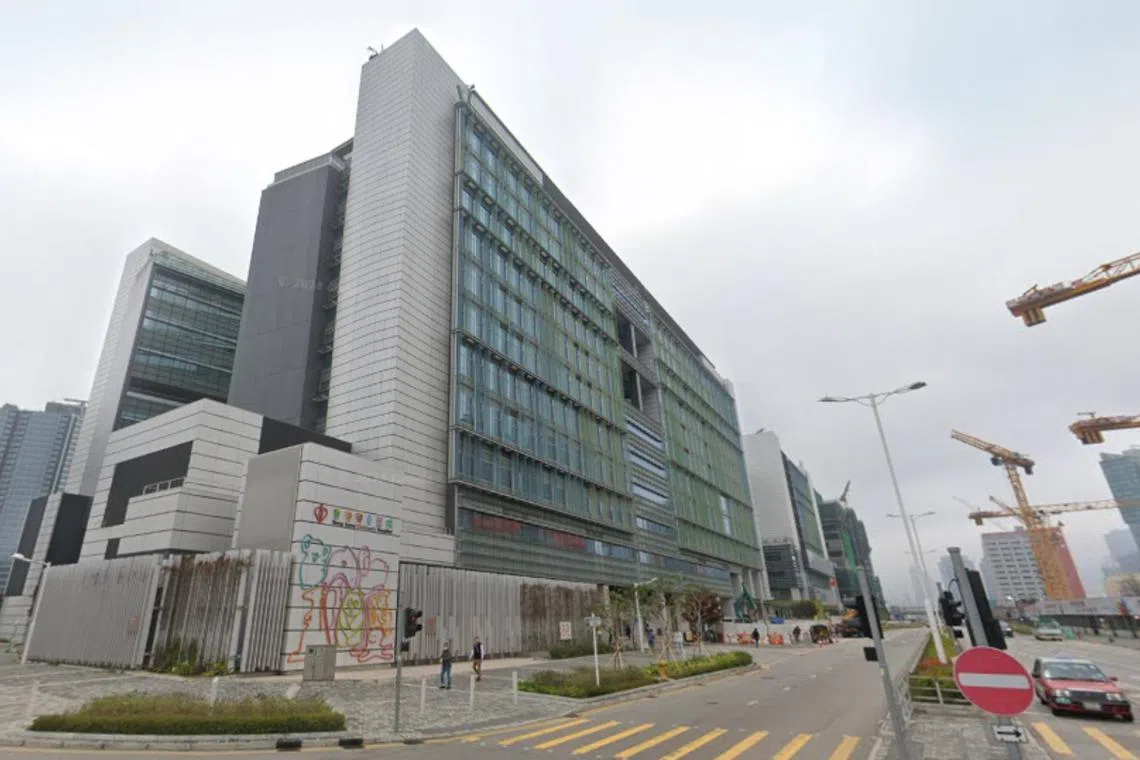
The authorities disclosed on Feb 7 that the Hong Kong Children’s Hospital in Kai Tak had temporarily shut its ear, nose and throat department.PHOTO: SCREENGRAB FROM GOOGLE MAPS
“The medical staff I met all seemed overworked and in a rush to move on to the next patient; I could see my doctor only briefly once a day,” Mr Li told ST, adding that his ward was crammed with more than 30 patients overseen by four to five nurses.
“Under these conditions, I felt even worse. But I told the doctor I was better so he would discharge me sooner.”
While Hong Kong has long been aware of its medical manpower shortage, the issue has worsened due to demographic changes.
In 2014, 15 per cent of the 7.2-million-strong city were people aged at least 65. In 2024, the proportion had risen to 22 per cent of the now 7.5 million population.
By 2045, one in every three Hong Kongers will be elderly in a city of about 8.2 million people, according to the government’s projections.
Seniors are more likely to require frequent medical attention as chronic diseases set in.
Already, the elderly population’s growth – a 61 per cent jump from 2013 to 2023 – has far outstripped that of new doctors in the city. The number of registered doctors in the same period rose by just 23 per cent.
There are concerns over whether Hong Kong’s healthcare system is equipped to cope with it.
The city’s ratio of doctors per 1,000 persons is 2.1, lower than that in other developed economies such as South Korea (2.6), Japan (2.7) and Singapore (2.8), according to a Legislative Council research report in December 2024.
Hong Kong has 16,954 registered doctors, according to the latest data from the Department of Health provided to ST. Yet, only 40.8 per cent are in public healthcare, even as the sector handles nine in 10 of the city’s inpatient services.
This proportion has ticked downwards from about 42 per cent in 2023, although the city added 548 new registered doctors in 2024.
Hong Kong prides itself on having an affordable public healthcare system, with charges at emergency departments kept below HK$200 (S$34.50). But that may also have contributed to the city’s medical manpower problem.
“Because our public hospitals are so well-subsidised, people tend to go to their A&E departments even for minor problems, or ‘doctor shop’ a lot by using their specialist outpatient clinics,” Hong Kong’s former health minister Sophia Chan told ST.
“This has aggravated the doctor shortage,” said Professor Chan, who is now director of the University of Hong Kong’s (HKU) Primary Health Care Academy.
The Hong Kong government has tried to reduce the burden on the public healthcare sector.
Among its measures is a voucher scheme for the elderly since 2009 that subsidises seniors who use private healthcare services.
But the scheme has been met with limited success as older patients continue to prefer the cheaper public healthcare system that they are more familiar with navigating.
During Prof Chan’s time in office from 2017 to 2022, she introduced reform in primary healthcare, working with private doctors to set up district health centres across Hong Kong, providing early screening programmes for younger people and co-payment subsidies for patients who opt to go private.
“The reform measures have been quite successful, particularly in the early identification of chronic diseases to avoid jamming up the public system,” she said.
In 2017, the authorities also raised public hospitals’ A&E fees from HK$100 per patient to HK$180 to lower the incidence of abuse of its services. A further fee hike continues to be occasionally debated in the Legislative Council whenever hospital manpower shortages are discussed.
“We definitely have a shortage of public doctors. But a strong primary-care system and a middle ground in affordability in public versus private healthcare can help alleviate the problem,” Prof Chan said.
Many public hospital doctors and nurses have left the system in recent years as part of a citywide emigration wave or for better conditions in the private sector.
“The biggest challenge facing Hong Kong’s healthcare sector is the high number of medical workers leaving the public system,” Mr Alex Lam, chairman of advocacy group Hong Kong Patients’ Voices and a lawyer by profession, told ST.
“Not enough seasoned doctors are being recruited.”
Hong Kong’s public hospitals lost 350 doctors – or 5.2 per cent of all public system doctors – in 2024 and 391 in 2023, according to data provided to ST by HA. More than 800 public doctors departed in 2022 and 2021.
Thousands of nurses also left the system, accounting for about 10 per cent of the nursing strength each year.
The shortfall of public hospital doctors is already at 10.3 per cent of the total strength and is expected to inch up to 10.4 per cent – or 1,570 doctors – by 2030.
An HA spokesman told ST: “HA pays close attention to the manpower situation and has implemented multi-pronged measures to retain, attract and nurture healthcare talent.”
These measures include strengthening recruitment and re-employment of retired staff, enhancing promotion and remuneration, setting up a training academy, and offering staff a low-interest home loan scheme, the spokesman said.
A related problem is how trainees have been deployed to the front lines.
In late 2024, public hospitals reported two medical blunders involving trainees in just four months. In both cases, intern doctors wrongly inserted a feeding tube into their patient’s respiratory system.
Following these cases, HA proposed reforms including improving training for doctors interning and holding senior managers responsible for medical care mistakes.
HA told ST that the rate of such events in the city’s public hospitals was “approximately 0.32 per 100,000 population, significantly lower than rates in the United States, the United Kingdom, Australia, and other countries”.
Hong Kong’s Chief Executive John Lee has listed further measures to reform the healthcare system and plug its manpower gaps.
These include setting up a new medical school, expanding existing hospitals’ capacities, as well as attracting more non-locally trained healthcare professionals.
At least 280 doctors and 70 nurses from outside Hong Kong have since been hired under the policy.
HKU health economist Karen Grepin said that “simply trying to attract more health professionals from abroad will not fix (Hong Kong’s doctor shortage)”.
The authorities will have to “think beyond traditional cadres of health professionals to shift tasks to make the health system more efficient”, she told ST.
“There is currently a global shortage of health workers, and thus many places are competing for the same supply of health workers,” Prof Grepin said, adding that “a lack of primary care physicians willing to work in the public health system” was another issue for the city.
Mr Lam, the patient rights’ advocate, said it would still be difficult to hire more patient-facing non-local medical staff for the public sector as Cantonese, the local language, is a potential barrier for some applicants.
To improve service quality, he said hospitals “should prioritise strengthening procedures and provide intern doctors with a safe place to learn and practise”.
“Intern doctors shouldn’t be thrown straight into the sea and expected to survive on their own. The mistakes they make could be fatal,” he added.
- Magdalene Fung is The Straits Times’ Hong Kong correspondent. She is a Singaporean who has spent about a decade living and working in Hong Kong.
Join ST’s Telegram channel and get the latest breaking news delivered to you.
link