Hormonal Changes in Pregnancy Linked to Higher Cavity Risk, Study Finds


Dr. Ruqian Yang, the leading author of the study
A new study has revealed a significant link between hormone levels in pregnant women and their risk of developing cavities. Researchers from the Eastman Institute for Oral Health, part of the University of Rochester Medical Center, found that the elevation of certain hormones in saliva is associated with higher levels of cavity-causing bacteria.
Cavities are nearly twice as common in pregnant women as in non-pregnant women, with up to 87.2% of pregnant women experiencing untreated dental decay. This issue is particularly pronounced in underserved communities, where access to dental care may be limited. A longstanding question in research has been whether hormonal changes during pregnancy contribute to an increased risk of oral diseases.
The EIOH study, published in Journal of Clinical Medicine, found that hormonal changes during pregnancy, especially elevated levels of progesterone, estradiol, testosterone, and cortisol, were linked to increased levels of Streptococcus mutans (S. mutans), a bacteria known to cause cavities. Participants with higher hormone levels also had more plaque and untreated cavities.
“This connection is particularly concerning because the oral health of an expecting mother directly impacts the developing baby,” said co-author Jin Xiao, DDS, PhD, professor and founding director of Perinatal Oral Health at EIOH. “Poor maternal oral health has been linked to an increased risk of premature birth, low birth weight, and early childhood cavities.”
The study suggests that saliva hormone testing may serve as a valuable tool for identifying pregnant women at higher risk for cavities. Such early detection could allow healthcare providers to implement preventive dental strategies, reducing oral health risks for both mothers and their babies.
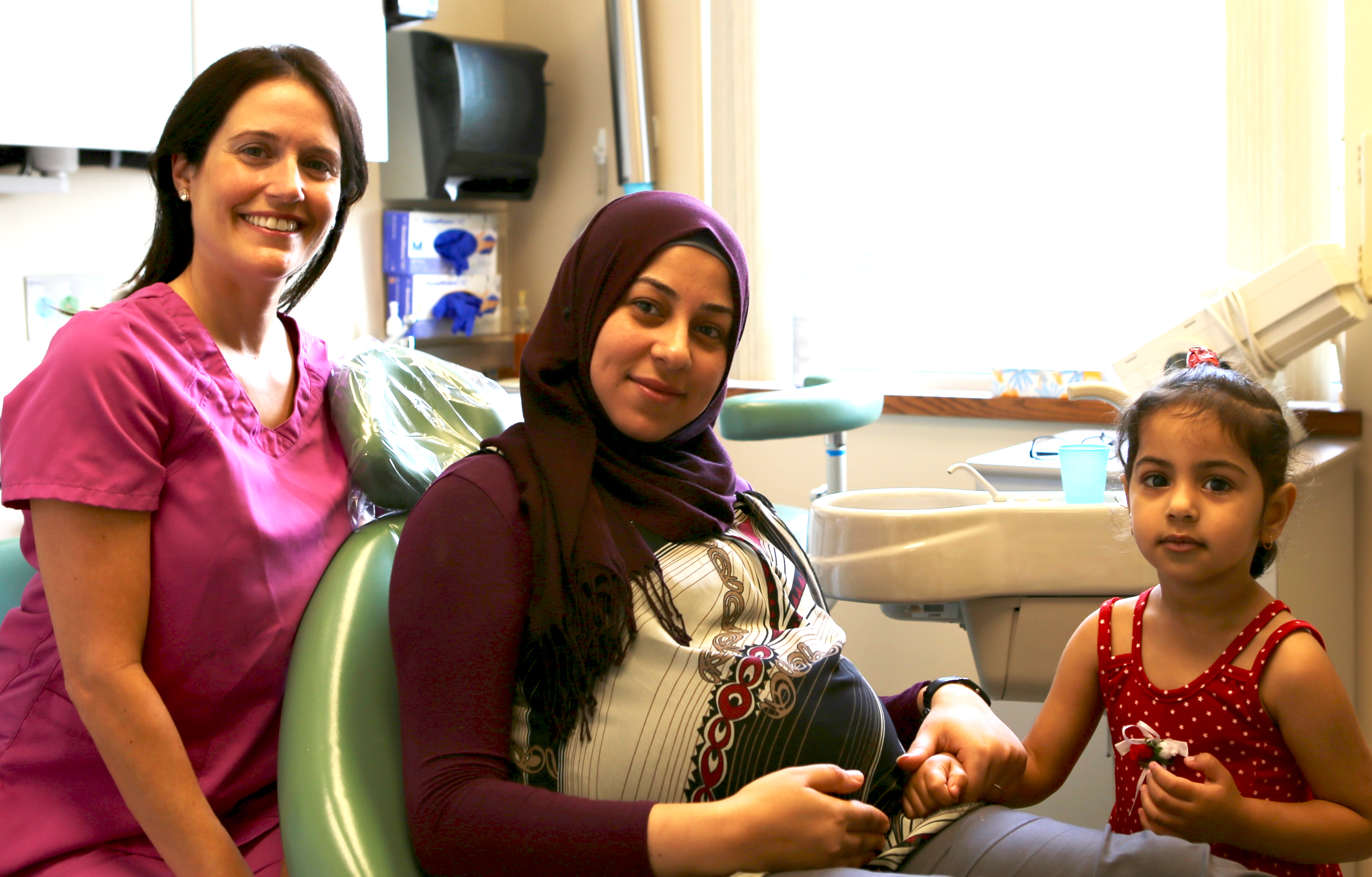
Dental care during pregnancy is important for the oral health of both the mother and baby.
“This study emphasizes the importance of integrating dental care into prenatal health services, especially for underserved communities where access to preventive care is often delayed,” said the leading author Ruqian Yang, DDS, MS, an EIOH research fellow and dental resident, “By addressing oral health early in pregnancy, healthcare providers may improve outcomes for both mother and child.”
A common misconception about dental care during pregnancy is that it’s unsafe or unnecessary, and that pregnant women should avoid dental visits or postpone treatments until after the child is born.
“Nothing could be further from the truth,” Dr. Xiao stressed. “Addressing oral health concerns during pregnancy is vital for both the mother and baby’s well-being.”
To help improve access to care, EIOH established a first-of-its-kind Pregnancy and Infant Dental Clinic, dedicated to treating pregnant women and their infants, ensuring they receive the necessary dental care without delay. Dentists who are receiving advanced specialty training at Eastman Institute for Oral Health rotate through this clinic. Dr. Yang completed her perinatal oral health and research fellowship, during which she conducted this study. By integrating this specialized training into their training programs, EIOH is breaking down the misconceptions and training the next generation of providers to improve access and care.
The study was funded by the National Institutes of Health.
link