


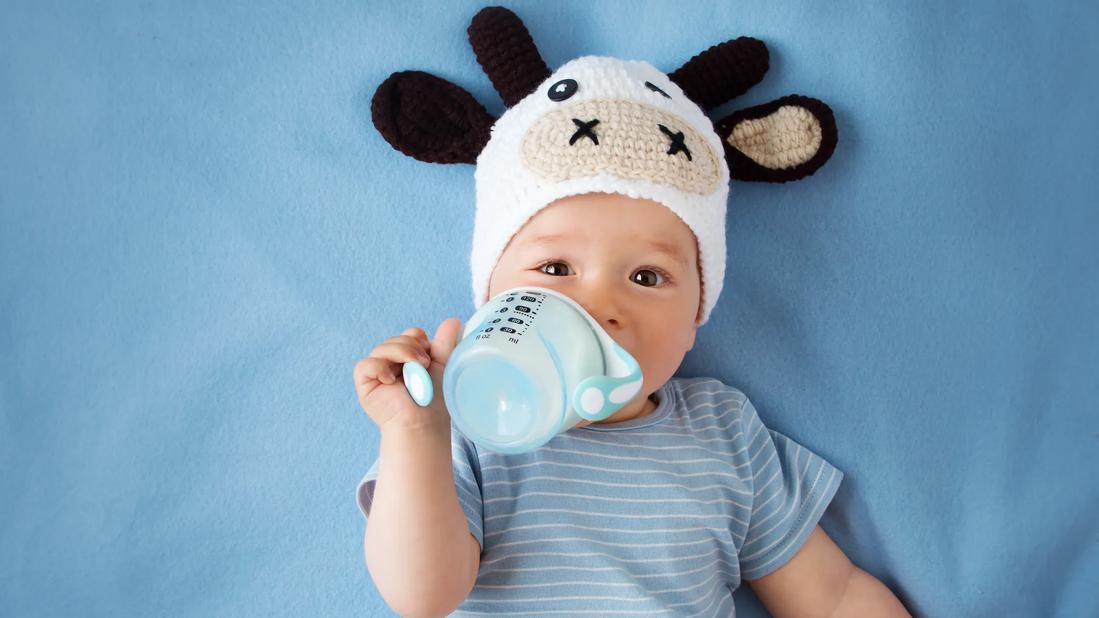
Babies drink breast milk and baby formula that’s specifically made to replicate breast milk — so, it may seem like babies should also be able to safely drink dairy milk, right?
Advertisement
Cleveland Clinic is a non-profit academic medical center. Advertising on our site helps support our mission. We do not endorse non-Cleveland Clinic products or services. Policy
Not so fast.
“Avoid feeding cow’s milk to any child younger than 12 months old,” states pediatrician Kimberly Churbock, MD. And they shouldn’t have other kinds of milk, either — even the kinds that come from almonds, oats and soy.
She explains why cow’s milk and other types of milk aren’t fit for your baby’s diet, and when it’s safe to introduce them.
Risks of giving milk to babies under 12 months
“Until your child is a year old, the only kind of milk they should have is breast milk and/or properly prepared, iron-fortified infant formula,” Dr. Churbock reiterates.
But why, exactly? Cow’s milk is associated with health risks in babies:
- May cause gastrointestinal bleeding. “Cow’s milk has been associated with small micro-bleeds in the digestive tracts of infants younger than 1 year old and in toddlers over the age of 1 who consume it in excess,” Dr. Churbock shares.
- Lacks the nutrients babies need. Unlike dairy milk, breast milk and formula have the optimal balance of most of the nutrients, vitamins and minerals that babies need. (If your baby is breastfed, talk to your pediatrician about whether you need to supplement with vitamin D and iron.)
- Too many proteins. “Cow’s milk doesn’t have the right proportions of the proteins and fats that are found in breast milk or formula,” Dr. Churbock explains. This can strain your baby’s kidneys, among other risks.
For the first six months of their lives, most babies should get all of their nutrition from breast milk and/or formula. At that point, you can start introducing solid foods. Turn to your pediatrician for individual advice based on your child’s health needs.
Can babies have other types of milk?
A few foods that adults eat aren’t good for babies, including various types of milk.
“In addition to avoiding cow’s milk, you shouldn’t give goat’s milk or milk alternatives (like soy milk or almond milk) to infants under 12 months,” Dr. Churbock states. “They’re not optimal for your child’s development and growth.
Even after your child has hit age 1, it’s best to stay away from flavored milk (and milk alternatives), like those that come in chocolate, vanilla or strawberry varieties. They add extra sugar that kids not only don’t need, but also really shouldn’t have.
In fact, the American Academy of Pediatrics recommends that children under 2 consume no added sugar at all, and children 2 and older should have no more than 25 grams (or 6 teaspoons) of added sugar per day.
Can babies have other dairy products?
Cow’s milk isn’t safe for babies under 12 months, but the same rules don’t necessarily apply to other dairy products.
“You can typically introduce cheese and plain yogurt to infants younger than 1 year of age,” Dr. Churbock clarifies. “Just be sure to consult with your pediatrician if your child has a milk protein intolerance or milk allergy.”
She says it’s also generally OK to use small amounts of milk to cook or to prepare other infant-appropriate foods.
How to safely introduce milk to toddlers’ diets
After age 1, it’s safe — and recommended — to start incorporating milk into your child’s diet, especially if they’re starting to transition away from breast milk and/or formula.
“From ages 1 to 2, babies should be given plain whole cow’s milk, which has the right balance of nutrients for their needs,” Dr. Churbock says. “If your child has a milk allergy or other issues with cow’s milk, your pediatrician or a registered dietitian can suggest the healthiest, safest nutrition plan.”
So, where should you start? She shares some tips:
- Add milk to meals. Mix a little bit into scrambled eggs, blend it into a smoothie or pour some over their whole-grain cereal at breakfast time.
- Start small. Offer your toddler small amounts of plain, whole cow’s milk in a cup. “An ounce or two at a time is a great place to start,” Dr. Churbock suggests. “Just remember that after age 1, milk is complementary to solid foods, so limit your toddler’s total milk intake to no more than 16 to 20 ounces per day.”
- Go half and half. If needed, you may ease your kid into cow’s milk by mixing it with breast milk or prepared formula, to start. “As they get used to the taste, you can start lowering the ratio of breast milk or formula until you’re just serving them cow’s milk,” she says.
- Warm it up. If your child is used to drinking room-temperature breast milk or formula, cold milk will likely come as a surprise! Warming it up a bit can help ease the shift.
Once your child reaches age 2, ask your pediatrician what kind of milk your child should be drinking. Older toddlers should typically switch to fat-free or 1% dairy products, which provide the same nutrients but with less fat.
link